Governance Framework & Corporate Organs
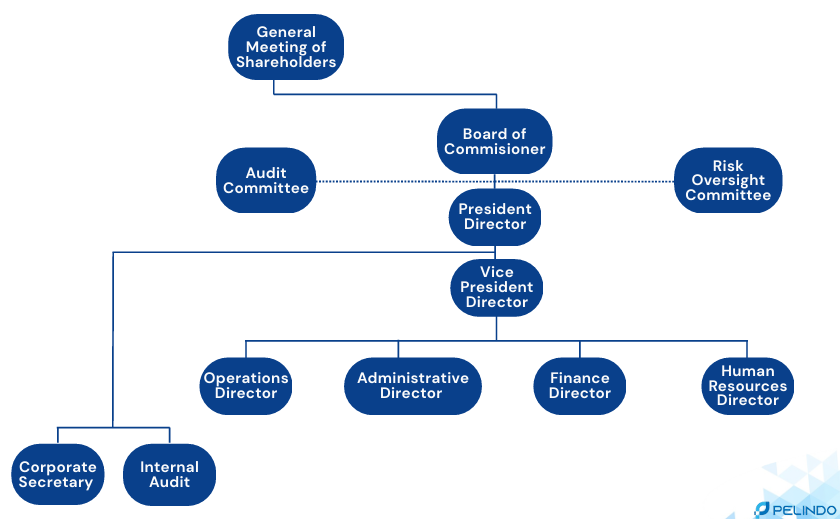
Shareholders / General Meeting of Shareholders (GMS)
The GMS is the highest governing body within JICT. Through the GMS, shareholders make key decisions related to the company’s direction, strategy, and policies.
Board of Commissioners
The Board of Commissioners is responsible for overseeing the company’s management policies and providing advice to the Board of Directors.
Audit Committee
The Audit Committee operates independently and reports directly to the Board of Commissioners. Its primary duties include assisting the Board in ensuring the effectiveness of both external and internal audits, evaluating audit implementation and results, providing recommendations for improvements to management control systems, ensuring the accuracy of corporate information, and identifying matters requiring the Board's attention.
Risk Monitoring Committee
The Risk Monitoring Committee assists the Board of Commissioners in overseeing the implementation of risk management across all company activities. The committee ensures that each business process adheres to prudential principles, regulatory compliance, and Good Corporate Governance (GCG) practices to support the company’s sustainability and integrity.
Board of Directors
The Board of Directors is fully responsible for managing the company in accordance with the Articles of Association and applicable regulations, upholding professionalism, transparency, accountability, and fairness. The Board prepares the annual work plan, governance guidelines (GCG Manual), manages corporate administration, and submits the annual report and financial statements as accountability to the Board
of Commissioners and the GMS.
Corporate Secretary
The Corporate Secretary ensures compliance with disclosure regulations based on GCG principles, provides information to the Board of Directors and Board of Commissioners, acts as a liaison with stakeholders, and manages and maintains corporate documentation.
Internal Audit
Internal Audit is responsible for evaluating the effectiveness of internal controls, risk management, and corporate governance. It also conducts assessments of efficiency and effectiveness in finance, operations, human resources, information technology, and other activities in accordance with company policies and regulations.